Lesson 206:
Minnie (Geddings) Cox
An ongoing illustrative history study
This piece originally posted on 12/04/2025
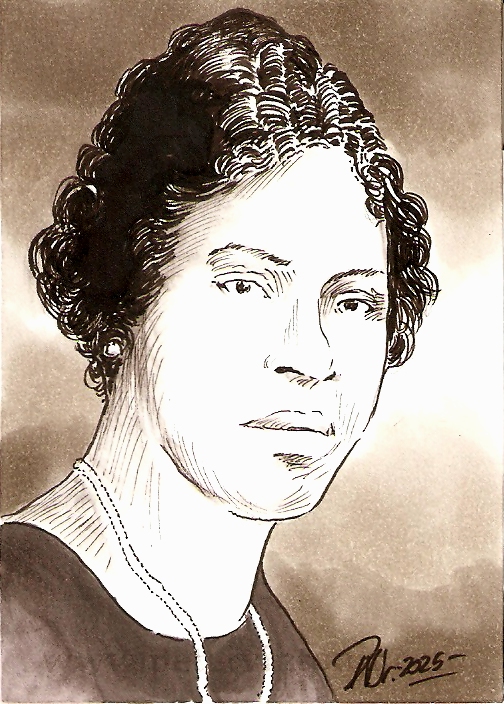 Born in 1869 Missouri to formerly-enslaved parents (about whom little is known), Minnie Geddings (later Cox) was nonetheless able to attend Fisk University and graduated in 1888, amongst a cohort of nearly 100 other Black women, that year. She moved to Indianola and took a job as a teacher in a still-new segregated public school. She later married that school's principal, Wayne Cox, and together they had a daughter. Significantly for the time, the Coxes lived in a well-to-do, mostly-white neighborhood; eventually themselves becoming landowners (approx. 24 farms and 30 rental properties). In a very real sense the Coxes were the "power couple" of their day; sitting on various committees, sponsoring a number of charities, starting their own bank, and, in Wayne's case, serving as chairman of the county Republican executive committee and as an alderman. Also significantly for the time, rather than wait for her husband's approval, Minnie instead sought out a local postmistress job of her own accord, to supplement her teachers' salary.
Regardless of status or connections, in 1891 Minnie was appointed as postmistress of Indianola, Mississippi by President Benjamin Harrison --the first Black woman to hold such a position. In the context of the time, this role was a deeply respected and lucrative public post --it served approximately 3,000 patrons and paid an annual salary of $1,100 --a very large sum, in those years. Minnie became swiftly known and admired for her efficiency and dedication; working long hours, and even stepping into cover late post office box rental payments for local customers. Also groundbreaking for the time, she paid (out of her own money) to install a public telephone in the post office, so that patrons could call ahead and save themselves a trip. Minnie was so successful in this position that she was reappointed to the post twice more, by successive Presidents William McKinley, and then Theodore Roosevelt.
The trouble began --as it usually does-- in a midterm election year. In the summer leading up to Election Day 1902, gubernatorial candidate (and not-at-all-subtle-about-it white supremacist) James Vardaman began agitating the voters of Indianola with racist rhetoric; ginning them up for having "tolerated" one of Those People as their postmistress. Aiming to expel her from the role, Vardaman's whisper campaign ultimately pushed the community to demand that Mrs. Cox resign from her office by January 1 of 1903, a full year before her term was to expire. Sensibly wishing to avoid violence, Minnie tendered her resignation to President Roosevelt, who refused to accept it; in fact he ordered the Postal Inspector and the Attorney General to hunt down and prosecute agitators, and then closed down the Indianola post office outright, forcing mail to be rerouted by way of inconveniently-distant Greenville. The story made national headlines and questions about Roosevelt's spiteful actions and Constitutional limitations on Presidential overreach were debated in Congress (good thing they don't trouble themselves with that sort of thing anymore, huh?). Despite having Roosevelt firmly in her corner, Minnie Cox was able to read the deteriorating situation, and opted to quietly resign and depart anyway.
The Indianola post office reopened a full year later in January of 1904, but with the role of its new postmaster having been reduced in rank to fourth-class. Meanwhile the Coxes organized and opened the Delta Penny Savings Bank, which would become the largest Black-owned bank in Mississippi; ironically making them even more successful than ever. Roosevelt would later observe in June of 1904 that "now the fantastic fools and moral cowards who encouraged or permitted the mob to turn her out, are depositing their funds in the husband's bank and have him as a director in a white bank, and she and her husband own one of the best houses in Indianola and one of the best plantations in the neighborhood."
Next lesson - Watch this space
Return to www.petervintonjr.com Main Page