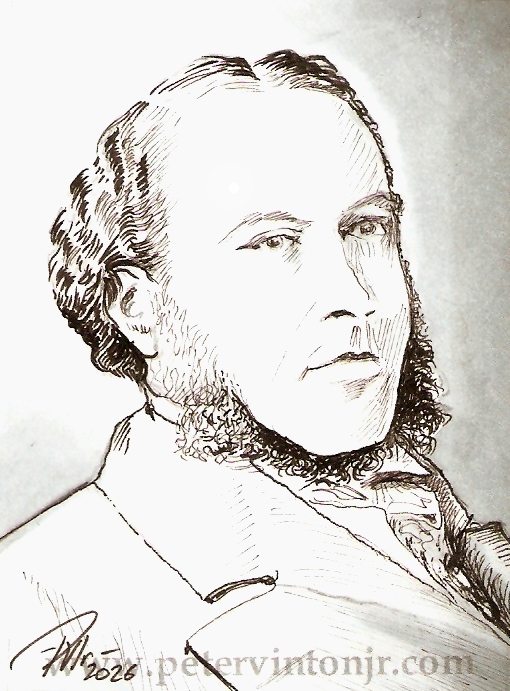
An ongoing illustrative history study
This piece originally posted on 05/23/2026
following a 5/21/2026 repost of Lesson 123, commemorating Oney Judge's 1796 escape
and the unveiling of a new mural at the the Black Heritage Trail of New Hampshire
Prelude | 217 | 218 | 219 | 220 | 221 | 222 | 223 | 224 | 225 | Email |
|---|
"But we do want a law enacted that we may be recognized like other men in the country. Why is it that colored members of Congress cannot enjoy the same immunities that are accorded to white members? Why cannot we stop at hotels here without meeting objection? Why cannot we go into restaurants without being insulted? We are here enacting laws for the country and casting votes upon important questions; we have been sent here by the suffrages of the people, and why cannot we enjoy the same benefits that are accorded to our white colleagues on this floor?"
As the critical issue of Black representation once again centers itself in the national discourse, I thought it appropriate to take a look at the trajectory of the first-ever Black representative to be elected to the U.S. House of Representatives. Meet Congressman Joseph Hayne Rainey of the 1st district of South Carolina, who served in office from 1870 to 1879.
Born enslaved in 1832, Rainey's also-enslaved father Edward was himself fortunate enough to be "favored" by his owner; to not only be educated but to be able to earn and set aside his own money --in his case, as a barber. By 1840 Edward had earned enough money to be able to purchase his, his wife's and his two sons' freedom. The family then moved to Georgetown, South Carolina, where the Free Black population accounted for some 40 percent of the total population. Joseph followed in his father's footsteps in a career as a barber: a relatively privileged yet no less precarious position, socially. He married Susan Cooper of the West Indies, and fathered three children, and --incredibly-- for a time he himself purchased several slaves of his own (who most likely worked in the same barbershop).
At the outbreak of the Civil War, Joseph was conscripted into the Confederate Army and worked fortifications in nearby Charleston; at one point also serving aboard two different blockade runners as a ship's cook. But in 1862 he and his family managed to escape to Bermuda and resided there for the remainder of the war and its immediate aftermath --in that time Rainey established himself not only as a barber but as a prominent citizen, building an easy rapport with local officials, both Black and white. Bermuda enjoyed a unique status (and considerable profit) during the Civil War as something of a "go-between" for the now-closed Northern and Southern import routes. In 1866 the Raineys moved back to Charleston, South Carolina, and Joseph parleyed his relative wealth and status into a career in politics. In 1868 he was named as a delegate to the state constitutional convention, and in 1870 was elected to the South Carolina Senate.
Later that same year Rainey ran in a special election to fill a vacancy in the U.S. House of Representatives; he won and was seated December 12, 1870. He would be re-elected to Congress for four more terms, ultimately serving until March 3, 1879 --making him the longest-serving Black congressman during all of Reconstruction. During his time in office, much like his Senate colleague Blanche Kelso Bruce (see Lesson #24 in this series) and his fellow South Carolina congressman Thomas Ezekiel Miller (see Lesson #159), he advocated for the passage of the Fourteenth Amendment, the Enforcement Acts, and in particular the Civil Rights Act of 1875. Perhaps most significantly in May of 1874, he became the first-ever Black Congressman to preside over the House as Speaker pro tempore. His last re-election (1876) was hotly contested and marred by growing incidences of voter intimidation and accusations of deliberate undercounting (sound familiar?). As Reconstruction faded out, Federal troops departed the Southern states and open violence against Blacks began to rise; Rep. Rainey competently read the tea leaves and arranged for his family to move to Connecticut well before his last term of office ended.
After leaving office Rainey served for a time as a U.S. Treasury agent and then pivoted into a private career in banking. He contracted malaria at the relatively young age of 55 and died a year later, in 1887.
 My humble thanks once again to the Art Center of Dover, New Hampshire, for the generous table space at this year's Spring Open Studios, at which the above piece premiered, the weekend of May 16.
Check them out --these studios really are incubating some of the most creative (and passionate!) souls with whom I've ever been privileged to share a gallery. Moreover I think it's safe to say we artists most definitely Understand The Assignment, this summer, and I am honored to be pushing back alongside them.
Next lesson - Lesson 222: Matt Baker