An ongoing illustrative history study
This piece originally posted on 10/25/2026
Prelude | 228 | 229 | 230 | 231 | 232 | 233 | 234 | 235 | 236 >> | Email |
|---|
"A Voteless Citizen is a Voiceless Citizen."
a slogan used by the Moores in the 1940's to encourage record-high voter registration in Florida
Another double biography today as we close in on the midterm elections, and yes, it's going to go hard. If the study of history doesn't make you uncomfortable, well... you probably aren't studying history, now, are you?
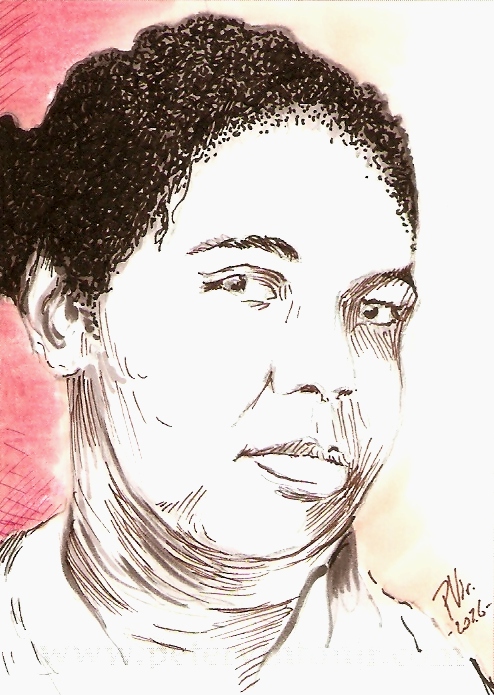
Harriette Vyda Simms was born in 1902 West Palm Beach, Florida. Intent on a career as a teacher, she graduated from the Daytona Normal Industrial Institute in 1920, and then secured a degree from Bethune-Cookman College (now University), in 1924. She taught at various Florida schools, eventually meeting future husband Henry Tyson Moore when they were both working at Titusville Colored School in Mims.
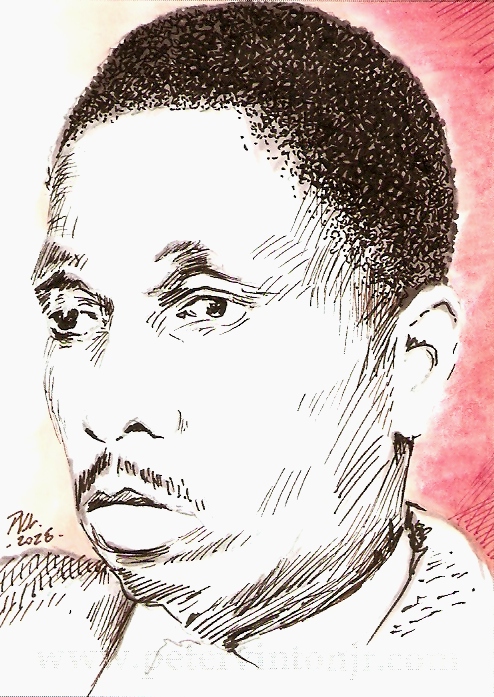
Harry Tyson Moore was born in 1905 Houston, Florida; his father died when he was very young and he was raised by his mother Rosa and her three sisters in Jacksonville. Harry's aunts were well-established members of a thriving Black community and instilled in young Harry the value of an education --he aced his way through high school, graduated from Florida Memorial College in 1925, and took a teaching job in Cocoa. Two years later he was elevated to principal of the Titusville Colored School in Mims, where he met Harriette.
The Moores were married on Christmas Day, 1926 (that date will be important). Raising two daughters, the Moores were among the founders of the Brevard County chapter of the NAACP in 1934. Three years later Harry filed the first-ever lawsuit in the South aimed at equalizing Black and white teachers' salaries. While the case ultimately failed, it prompted additional suits across the state. By 1941 the Moores were advocating on behalf of the NAACP; writing editorials, making speeches, and arguing against segregation and Black disenfranchisement. To that subject, by 1946 the Moores would have registered some 116,000 voters in the state of Florida --or, to measure it another way, 31% of all eligible black voters in the state; a percentage far larger than any other Southern state. To suggest that these numbers made the Moores some enemies, is a grim understatement. In 1946 the Moores were fired from their teaching jobs for this blatant pattern of boat-rocking. Undeterred, Harry became a full-time paid member of the state NAACP and would help to boost its statewide membership to nearly 10,000.
In 1949 Harry became involved in the Groveland Four case --a pivotal legal nightmare involving four young Black men falsely accused of raping a white woman and assaulting her husband. One of the accused was lynched by a Sheriff's posse (more properly a mob) of white men, with the other three being arrested and swiftly convicted by all-white juries with neither evidence nor witnesses presented; two of the three receiving the death penalty. Moore spearheaded (with the assistance of NAACP special counsel Thurgood Marshall) an appeal all the way to the Supreme Court, arguing that the defendants never received a fair trial. Two years later, in November 1951, the convictions were overturned and remanded for a new trial. Lake County Sheriff Willis McCall and several of his deputies promptly shot two of the three defendants while transferring them back to the county seat in Tavares for their new trial --the pretense being that "they tried to escape." Outraged, Harry Moore publicly called upon the governor to suspend and indict McCall.
On Christmas Day, 1951 --their 25th anniversary-- a bomb exploded beneath the Moores' home in Mims, destroying much of the house and fatally injuring the couple, but miraculously sparing both of their daughters and their families, who were visiting. The nearest hospital would not accept Black patients, and so Harry had to be rushed more than 30 miles away --due to the prolonged trip he died of his injuries enroute. Harriette was also critically injured but was at least able to attend Harry's funeral on New Year's Day, but then died of her own injuries on January 3... making the Moores the first NAACP officials to be killed in the civil rights struggle. Despite massive public outcry, three separate FBI investigations, and a statement from no less than President Truman himself, no charges were ever brought, no one was ever held accountable. Years later (as in, 2006) evidence came to light that pointed unmistakably to four local high-ranking members of the Florida Ku Klux Klan, but by then all four suspects were deceased.
In other words: "We investigated ourselves and cleared ourselves of any wrongdoing." You know. Just like the Senatobia, Mississippi police department and the thorough manner in which that state's Attorney General takes its officers to task for such actions. (Yes, I went there. In the correct timeline Kohen Wiley should be getting ready to celebrate his second birthday, in a few more days. And if you're not absolutely boiling with rage about that, then I cannot fathom why you'd still be following this trading card series, at this point.)
Back to the Moores and their work: Are you registered to vote? Find out. No, I mean it. Don't blithely assume so --an awful lot of folks back in the Moores' day thought they were all set for Election Day, too. You owe it to the Moores' memory, to make the effort to have a plan and get to the polls this coming week.
When you're done verifying, go learn a great deal more about Harry and Harriette at The Zinn Education Project. I honestly don't know what I'd do without that resource. And then go read this 1952 poem by Langston Hughes.
#justiceforkohenwiley
Next lesson - Watch this space